
Demographics and Strategic Planning
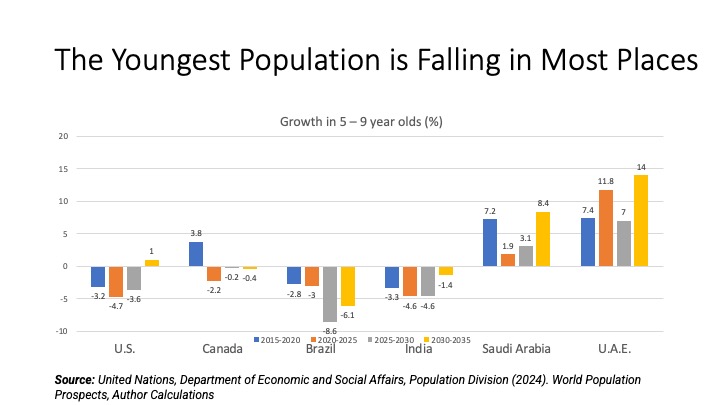
Demographic trends are wildly different across the world, and I was reminded of that recently when I gave a keynote presentation to a small group of leaders at Maple Bear Canadian School. Maple Bear is a global education enterprise that operates in 30 countries, and as part of their strategic planning exercises they asked me to speak on some of macrotrends that are changing the education landscape. At the top of those, of course, is demographics.
Between 2025 and 2030, the number of Canadian children aged between 5 and 9 will be relatively stagnant, while those between 10 and 14 will grow by 0.6 percent. The trends are similar in many countries including the U.S., as well as in China, India and Brazil. In contrast, there is expected to be a sharp increase in the child population in other countries including Saudi Arabia and the United Arab Emirates. The difference in potential market is huge. That said, when it comes to planning there is more to consider than just population size. A large market is one thing, but the economic strength and prospects matter just as much. That’s why when I do demographic analysis I combine it with a look at the forecast for growth, interest rates, labour markets and more. It is all part of the story, and all crucial to understand when it comes to planning.
Thank you to Maple Bear for letting me be part of your strategic planning process. Things in the world are changing very quickly, and I love to be part of the discussions on how to stay ahead of the curve.